laisser un message
Si vous êtes intéressé par nos produits et souhaitez en savoir plus, veuillez laisser un message ici, nous vous répondrons dès que possible.
Mode de gradation temporisée à 4 niveaux sur 2 heures - optimisation de l'autonomie de la batterie
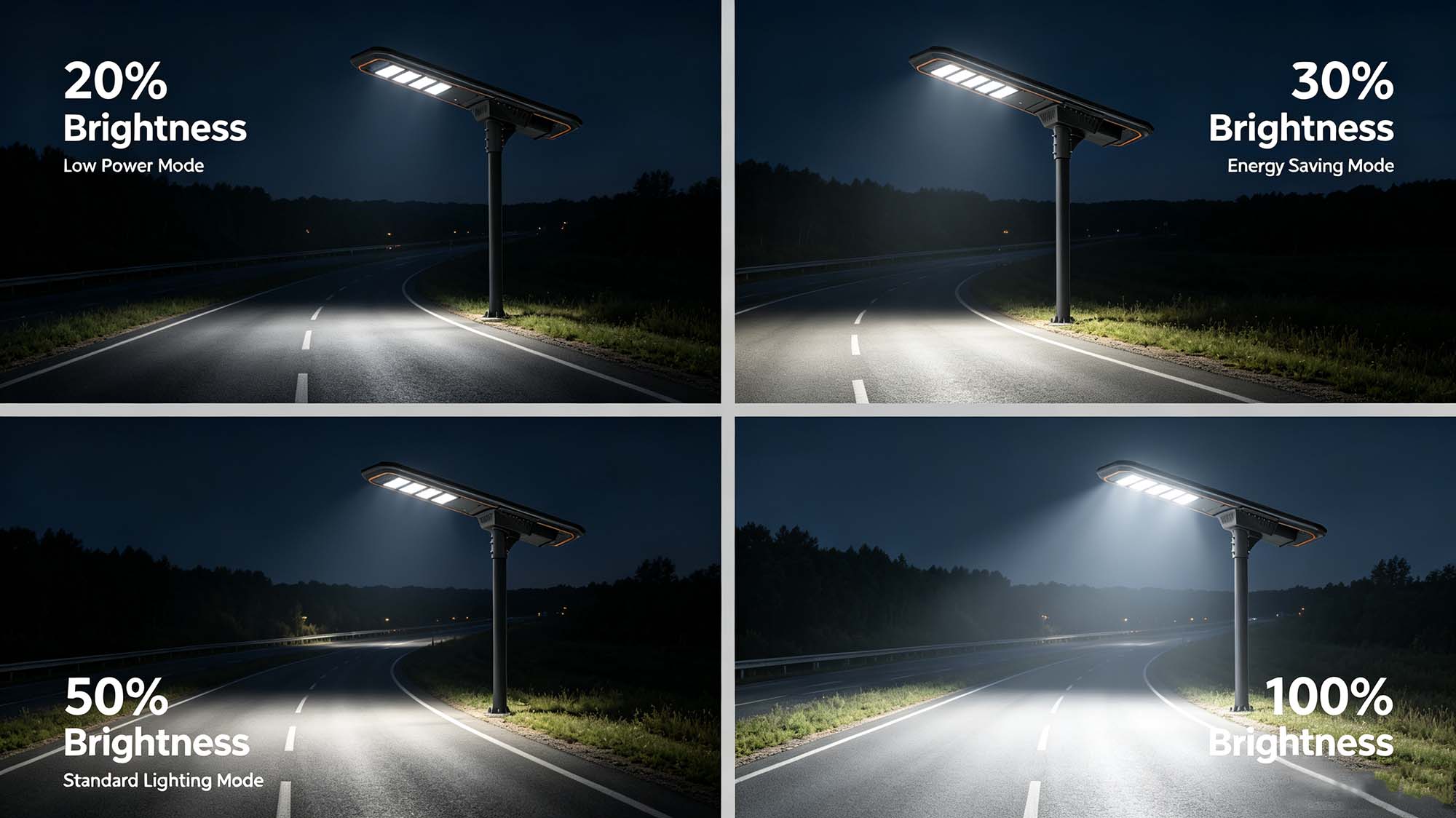
Le lampe Ce système alterne automatiquement entre 4 niveaux de luminosité (100 % → 60 % → 30 % → 50 %) sur une période de 12 heures la nuit. La décharge progressive prévient la décharge profonde des batteries au lithium, réduit les pertes de chaleur internes et prolonge efficacement leur durée de vie (LiFePO4). Utilisé avec des détecteurs de mouvement PIR, il optimise la sécurité de l'éclairage routier et la consommation d'énergie, s'adaptant parfaitement aux faibles heures d'ensoleillement hivernales en Pologne et respectant les normes européennes d'efficacité énergétique. Qu'est-ce que le mode de variation d'intensité lumineuse programmée sur 12 heures et 4 niveaux ?
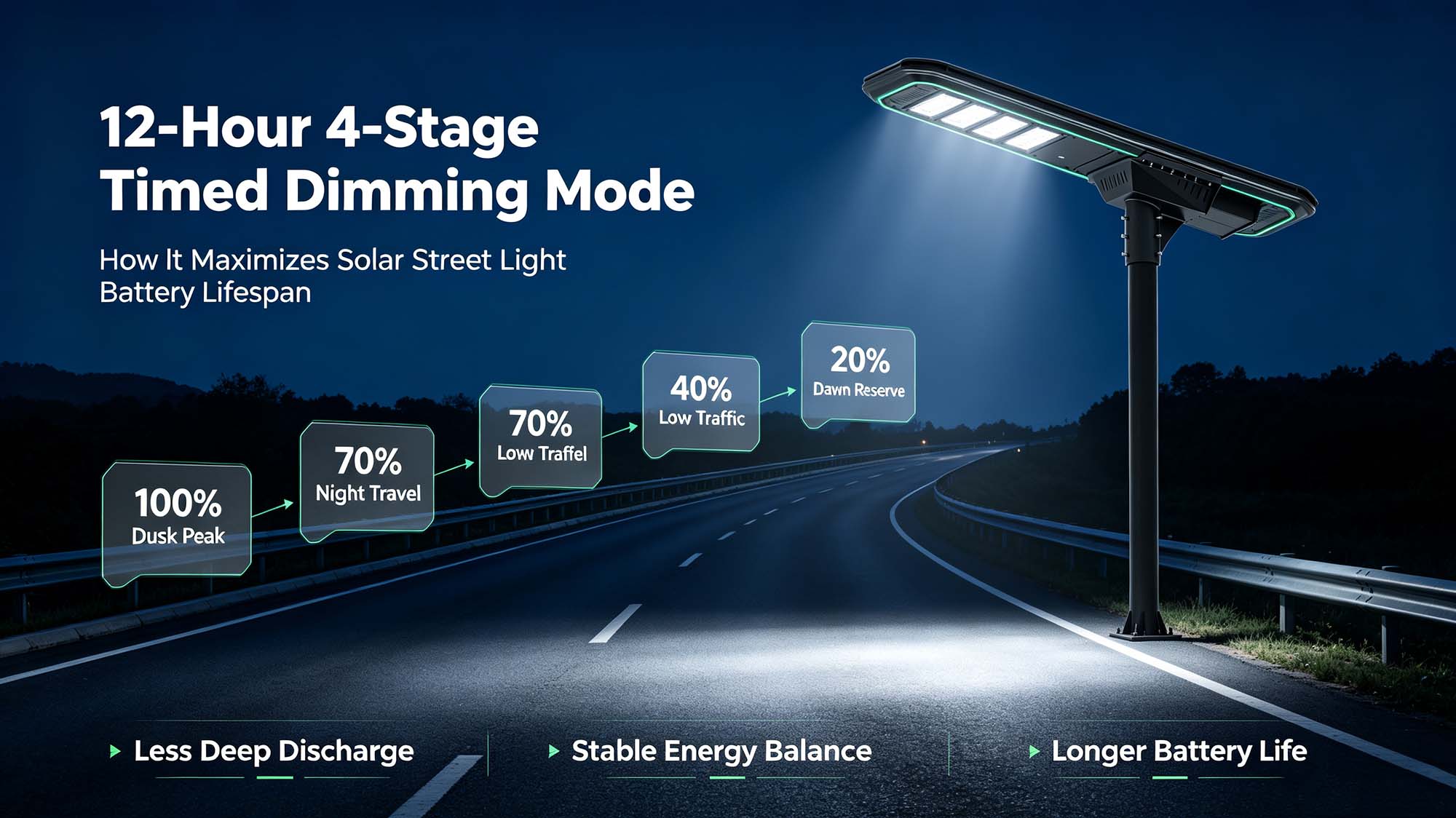
La manette est préconfigurée avec un programme complet Cycle de travail de 12 heures la nuit, divisé en 4 niveaux de luminosité et de puissance indépendants, qui basculent automatiquement selon une logique temporelle après que la lumière du crépuscule déclenche la lumière :
Phase 1 (0 à 3 heures après le crépuscule) : luminosité à pleine puissance (100 %)
Pendant les périodes de pointe de trafic piétonnier/véhicule, l'éclairage de sécurité routière maximal est atteint grâce à la pleine puissance du module LED Philips 5050.
Phase 2 (3 à 6 heures) : gradation de puissance moyenne à 60 %
Le volume de trafic diminue progressivement et le courant de décharge de la batterie est interrompu par une réduction modérée de la consommation d'énergie.
Phase 3 (6 à 9 heures) : mode d’économie d’énergie à faible consommation (30 %)
Véhicules/personnes avec un trafic nocturne ultra-faible, une consommation d'énergie minimale et un niveau de protection de la batterie principal.
Étape 4 (9 à 12 heures avant l'aube) : mode veille semi-lumineux à 50 %
Les déplacements avant l'aube ont légèrement repris. Par mesure de sécurité, la luminosité doit être modérée afin d'éviter une décharge excessive avant la reprise de la charge au lever du soleil.
1. Éviter les décharges profondes
Les batteries au lithium-fer-phosphate subiront une dégradation irréversible de leur capacité lorsqu'elles seront déchargées en dessous de la tension de coupure sûre.
L'éclairage continu à pleine puissance la nuit entraîne chaque nuit une décharge profonde importante, raccourcissant considérablement la durée de vie du cycle ;
La gradation segmentée à 4 niveaux assure une charge de décharge stable, maintient la tension résiduelle de la batterie dans une plage sûre chaque matin, élimine les dommages causés par une décharge profonde et double directement la durée du cycle de la batterie.
2. Stabiliser le courant de décharge et réduire les pertes de chaleur
Une décharge continue et soudaine à courant élevé peut provoquer un échauffement interne de la batterie, accélérer le vieillissement de l'électrolyte et augmenter la résistance interne.
La variation d'intensité par paliers temporisés contrôle le courant de sortie de manière progressive, réduisant ainsi la génération de chaleur interne, ralentissant le vieillissement de la batterie et réduisant le risque de dilatation/défaillance dans les environnements extérieurs froids pendant l'hiver en Pologne.
3. Adapter la capacité de charge solaire à la consommation électrique
En Pologne, l'ensoleillement est faible en automne et en hiver, ce qui limite la production d'énergie solaire.
Réduction progressive de la puissance sur 12 heures pour correspondre à la production d'énergie quotidienne réelle des panneaux solaires, éviter la décharge excessive de la batterie les jours de pluie/nuages, assurer un éclairage continu les jours de pluie et protéger la batterie.
Se conformer à la réglementation européenne en matière de conservation de l'énergie et de réduction des émissions, et respecter les normes d'évaluation des subventions locales pour les énergies propres ;
Réduire la charge globale de la lampe, ralentir la dégradation de la lumière LED des sources lumineuses Philips et prolonger simultanément la durée de vie de la lampe ;
Forte capacité d'adaptation au climat tempéré de la Pologne, fonctionnement stable lors des longues et froides nuits d'hiver et faible fréquence de maintenance après-vente.





 IPv6 network supported.
laisser un message
Numériser vers Wechat :

Numériser vers WhatsApp :