
laisser un message
Si vous êtes intéressé par nos produits et souhaitez en savoir plus, veuillez laisser un message ici, nous vous répondrons dès que possible.
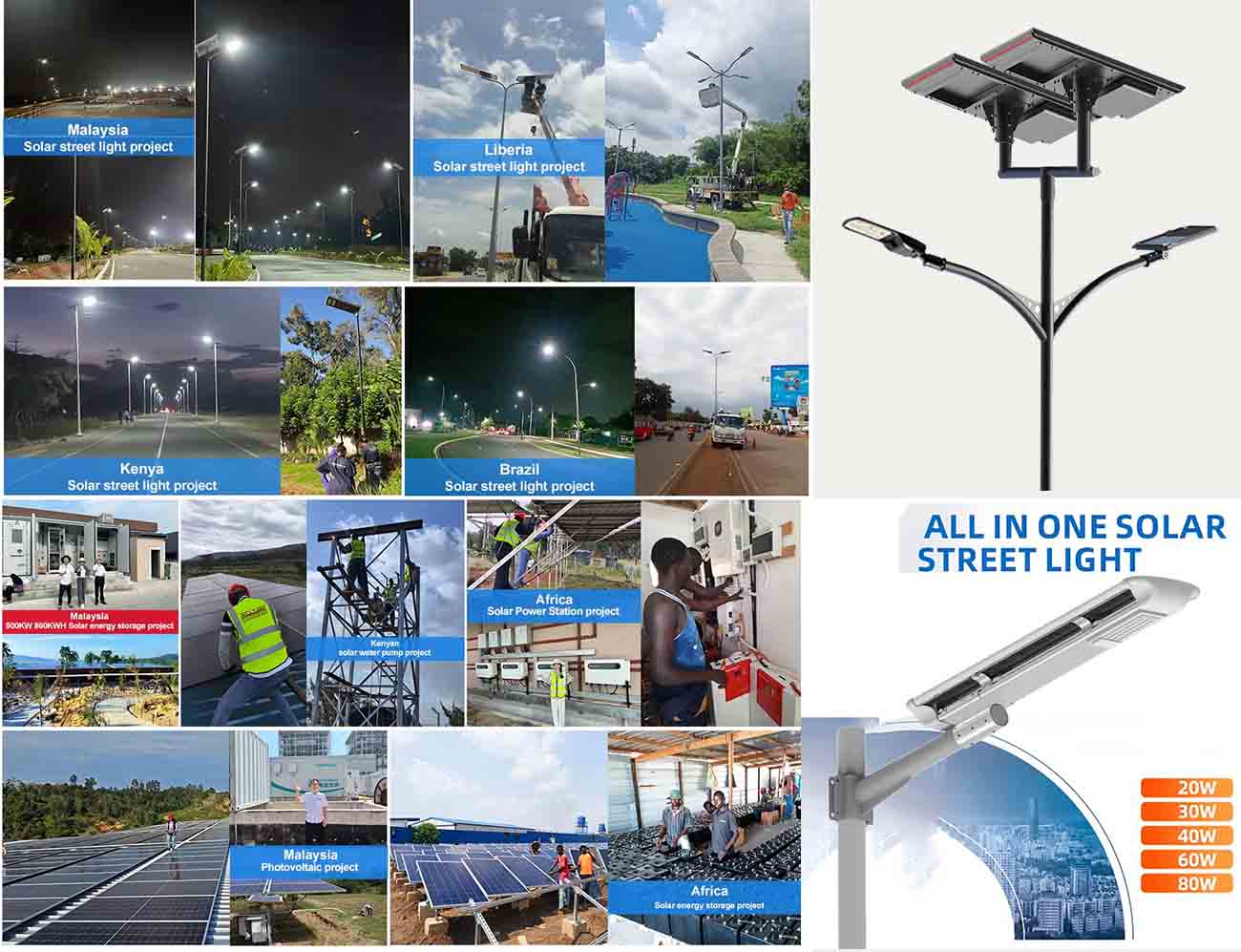
| Facteur d'évaluation | Tout-en-un (intégré) | Tout en deux (Séparé) |
|---|---|---|
| Luminosité et autonomie (priorité autoroute) | Limité par sa conception compacte : la taille du panneau solaire (max ~1,2 m²) et la capacité de la batterie (max ~100 Ah) limitent la sortie à 5 000–8 000 lumens. L'autonomie peut tomber à 6–8 heures par temps nuageux (insuffisant pour les besoins d'une utilisation routière 24h/24 et 7j/7). | Aucune contrainte de taille : les panneaux solaires plus grands (1,5–3 m²) et les batteries haute capacité (100–200 Ah) fournissent 8 000 à plus de 20 000 lumens. Permet un éclairage continu de 10 à 14 heures (même en faible luminosité) — répond aux exigences d'éclairage « toute la nuit » sur les autoroutes. |
| Absorption de l'énergie solaire | Angle du panneau fixe (intégré au luminaire) — difficile à optimiser en fonction de la latitude/saison. Risque d'ombrage dû aux structures/poteaux voisins. | Panneau solaire réglable : peut être incliné pour correspondre à la latitude locale (par exemple, 30°–45° pour une exposition solaire optimale) et monté plus haut pour éviter l'ombrage. Capte 20 à 30 % d'énergie solaire en plus qu'un système tout-en-un. |
| Durabilité et résistance environnementale | Conception compacte = charge de vent plus élevée (risque d'endommagement du poteau lors des tempêtes). L'espace restreint entre les composants entraîne une mauvaise dissipation de la chaleur, ce qui réduit l'autonomie de la batterie par fortes chaleurs (un point critique pour les autoroutes traversant des zones désertiques ou tropicales). Les vibrations dues à la circulation peuvent desserrer les connexions internes. | Conception divisée = résistance au vent réduite (panneau solaire solidement fixé en haut du poteau). La séparation des composants permet une meilleure dissipation de la chaleur (la batterie et la LED ne sont pas exposées à la lumière directe du soleil grâce au panneau), ce qui prolonge la durée de vie de la batterie de 30 à 50 %. Le câblage et les supports plus robustes résistent aux vibrations dues à la circulation. |
| Maintenance et réparabilité | Entièrement intégrée : si un composant tombe en panne (par exemple, une batterie ou un panneau solaire), l’ensemble de l’unité doit être remplacé. L’entretien des autoroutes nécessite l’utilisation de nacelles élévatrices, ce qui engendre des coûts de remplacement et des temps d’arrêt importants. | Conception modulaire : remplacez uniquement les composants défectueux (ex. : batterie, LED) sans démonter l’ensemble du système. Les panneaux solaires peuvent être inspectés et nettoyés séparément (essentiel sur les routes poussiéreuses). Coûts de maintenance réduits et temps d’arrêt minimisés. |
| Complexité de l'installation | Simple : une seule unité, aucun câblage entre le panneau et le luminaire. Installation plus rapide (15 à 20 minutes par poteau). | Un peu complexe : nécessite le montage du panneau solaire, le passage des câbles et l'alignement de l'angle du panneau. Le temps d'installation (30 à 40 minutes par poteau) est plus long mais gérable avec des équipes formées. |
| Coût (initial vs. à long terme) | Coût initial plus faible (200 à 500 $ par unité) — intéressant pour les projets à budget limité. Coût à long terme plus élevé : durée de vie plus courte (3 à 5 ans) et remplacements fréquents. | Coût initial plus élevé (400 à 1 000 $ par unité) — compensé par une durée de vie plus longue (5 à 8 ans) et des coûts d’entretien/de remplacement plus faibles. Le coût total de possession (CTP) est inférieur de 40 à 60 % sur 5 ans. |
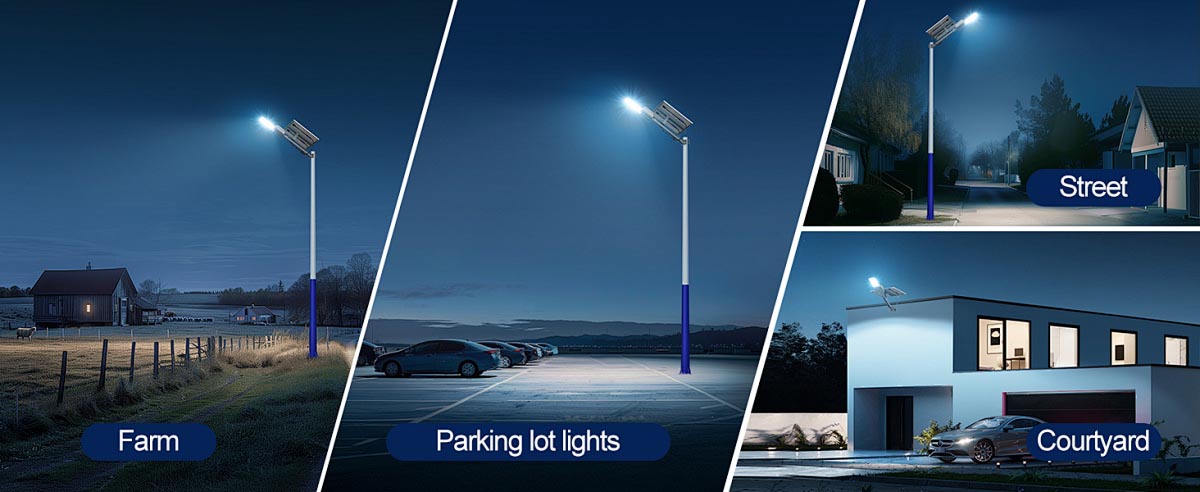
| Adapté aux voies autoroutières | Convient uniquement aux routes secondaires, aux routes rurales ou aux voies d'accès aux parkings (faible trafic, besoins d'éclairage modérés). |





 IPv6 network supported.
laisser un message
Numériser vers Wechat :

Numériser vers WhatsApp :